

 Duyen Nguyen
Have you ever wondered how a smartphone case, a stainless steel pot, or the intricate details of a motorcycle are made? The secret behind the countless metal products we use every day lies in metal stamping dies – indispensable tools, often referred to as the “powerful instruments that shape the material world around us.” This article will take you through everything you need to know about stamping dies.
1. Introduction to Stamping Dies
1.1. What is a stamping die?
A stamping die is a specialized tool used in mechanical manufacturing to form products from sheet materials (typically metals) under applied pressure.
Essentially, the die functions as a mold that forces the sheet into the desired shape without altering its mass or generating chips like in machining processes.
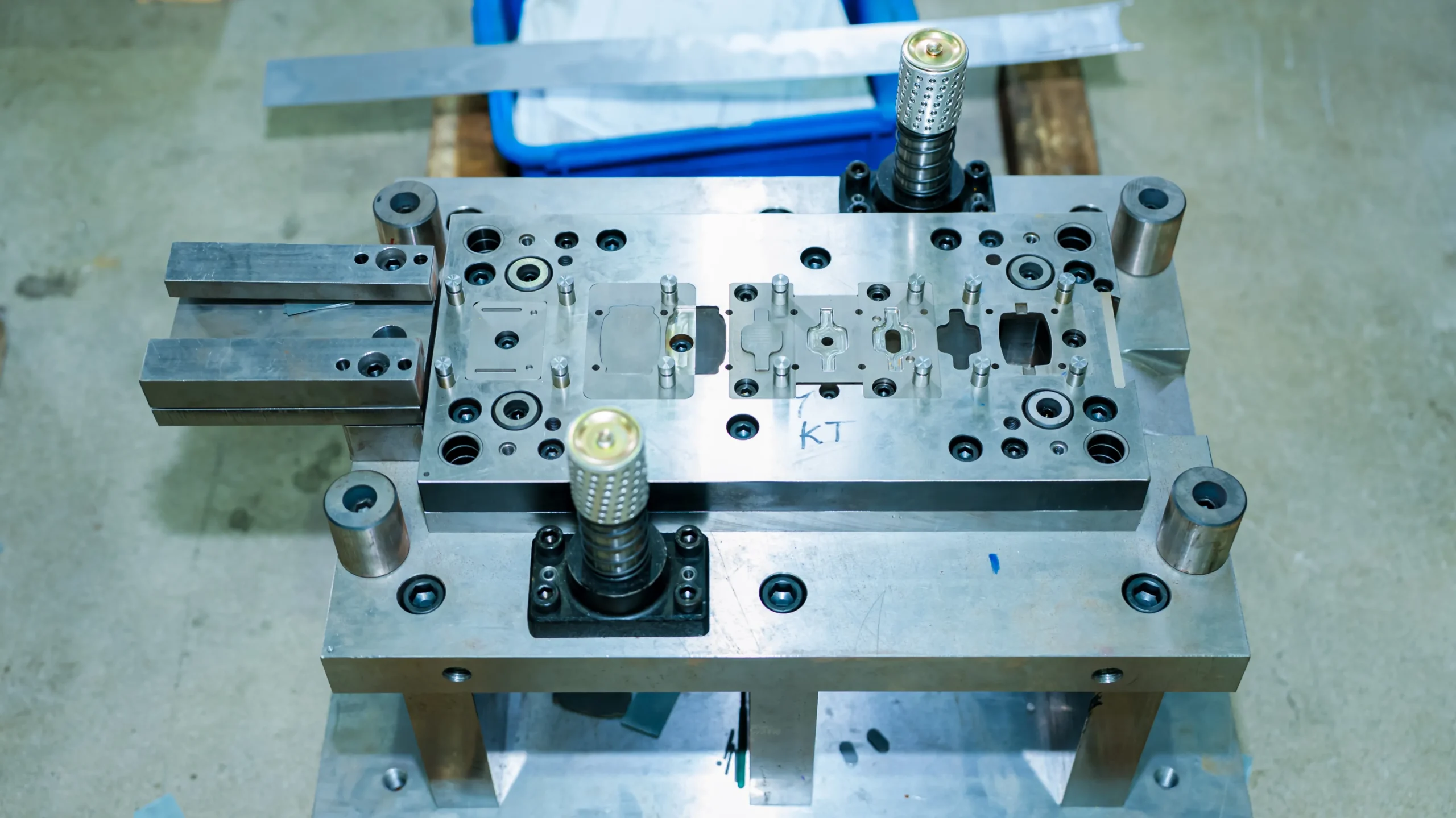
Basic structure of a stamping die with two halves: punch (upper) and die block (lower)
1.2. Stamping dies vs. punching dies
In practice, the terms “stamping die” and “punching die” are often used interchangeably, but they differ slightly:
-
Forming Die (Stamping Die): Shapes sheet metal into 3D forms such as bending, deep drawing, or rib forming (e.g., sinks, machine housings).
-
Blanking/Piercing Die (Punching Die): Cuts the sheet, creates holes, or separates flat profiles from a larger sheet (e.g., blanking).
In modern progressive dies, both forming and punching operations are combined. Therefore, in this article, we use both terms collectively to describe the same technology.
1.3. Applications of stamping dies in industry
Stamping dies are everywhere, enabling mass production with low cost and high consistency:
-
Automotive & motorcycles: Body panels, frames, doors, fuel tanks.
-
Household goods: Pots, pans, sinks, trays, washing machine and refrigerator housings.
-
Electronics: Laptop casings, phone housings, connectors, heat sinks.
-
Construction: Roofing sheets, gutters, brackets, hinges, steel trusses.
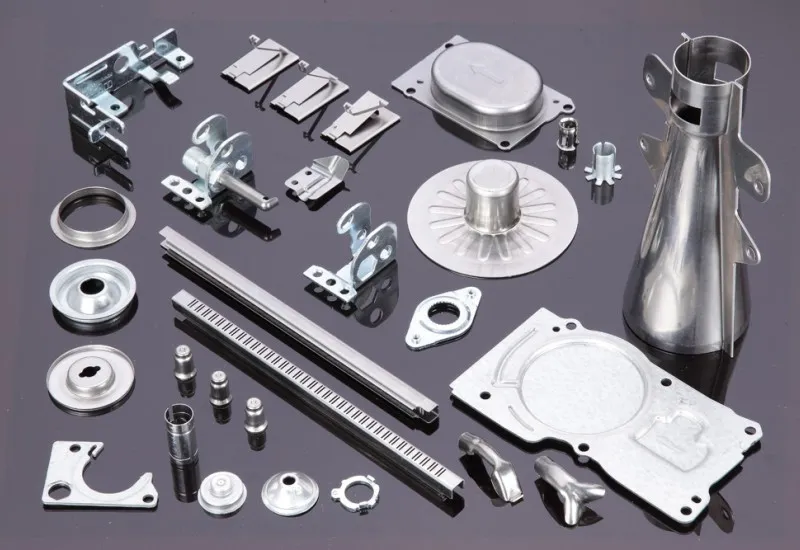
Wide applications of stamping dies in the production of metal components
2. Common Types of Stamping Dies
2.1. Simple Die
Performs only one operation in a single stroke (e.g., punching a hole or bending an edge). Simple structure, low cost, but low productivity – suitable for small-batch production.
2.2. Progressive Die
A complex die that carries out multiple operations (cutting, punching, bending, drawing) sequentially in one tool. The strip is fed automatically through stations, producing the finished part at the last station. Ideal for high-volume production.
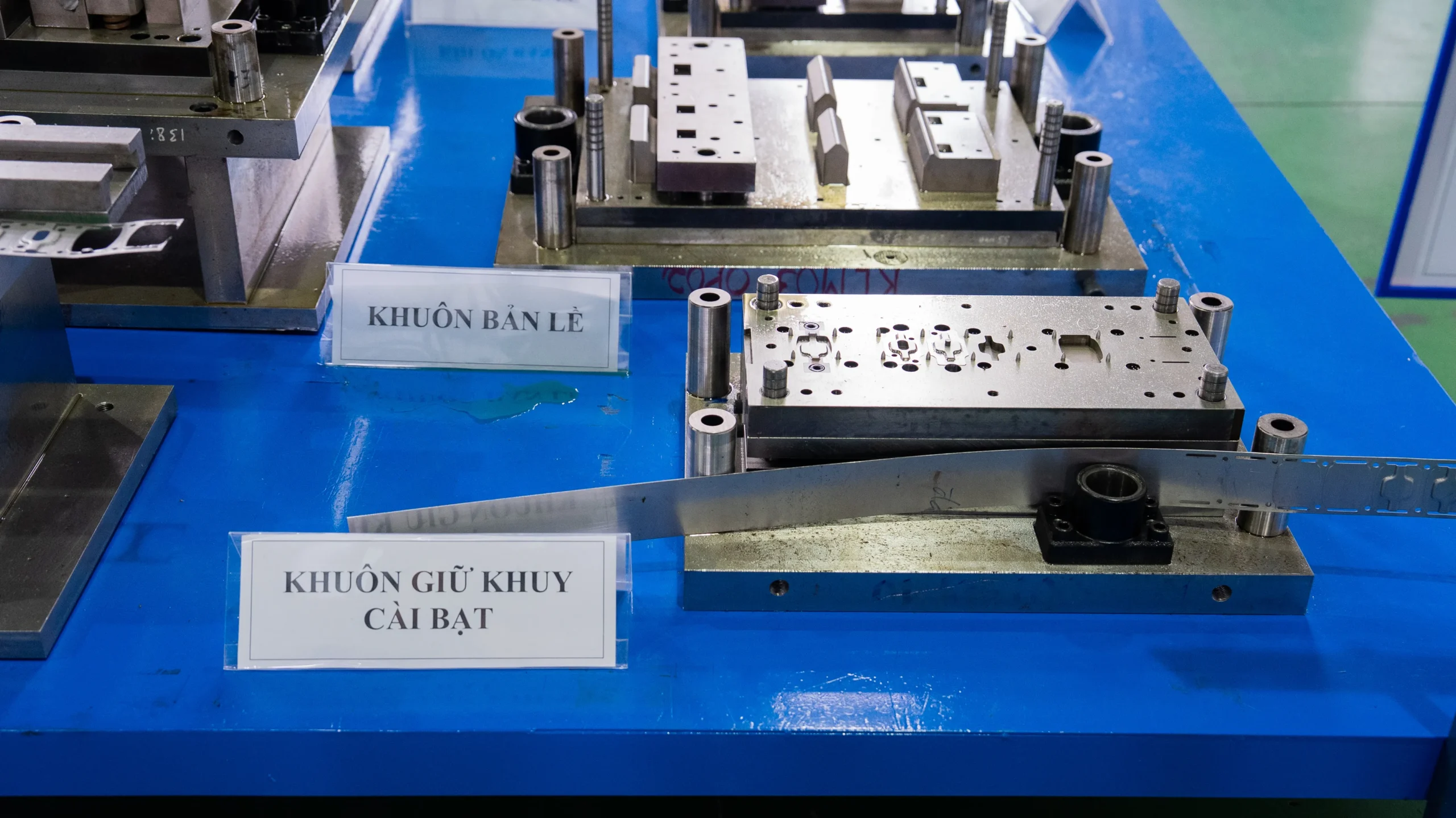
A progressive die provides high production efficiency
2.3. Compound Die
Performs multiple operations (mainly cutting) in one stroke at a single station. Example: blanking the outer profile and punching inner holes of a washer simultaneously. Provides very high positional accuracy.
2.4. Advantages of specialized stamping dies
-
High productivity: Thousands to tens of thousands of parts per hour.
-
Consistency & precision: Every part identical to the next.
-
Cost savings: Reduced labor and material waste in mass production.
-
Capability: Produces complex geometries that are difficult with other processes.
3. The Metal Stamping Process
3.1. Process overview
The sheet (blank) is placed between the punch and die block. When the press applies force, the blank is deformed or sheared into the die cavity shape.
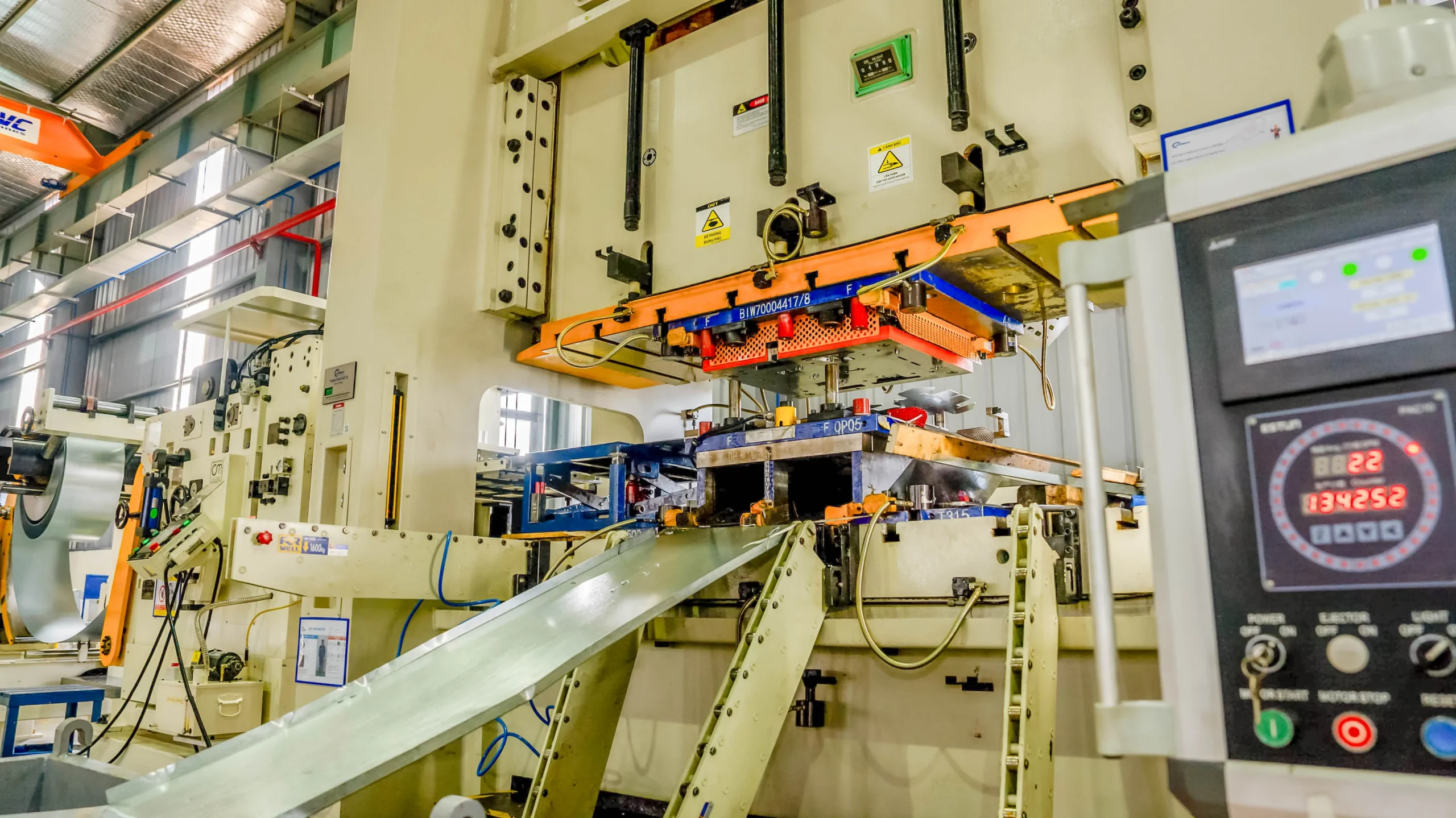
Metal stamping process on an industrial press machine
3.2. Common stamping materials
-
Low-carbon steels (e.g., CT3)
-
Stainless steels (SUS304, SUS201, SUS430)
-
Aluminum and its alloys
-
Copper and its alloys
-
Sheet steel, galvanized sheets
3.3. Factors affecting stamping accuracy
-
Die precision – the most critical factor.
-
Sheet quality – thickness and hardness variations affect results.
-
Press condition – rigidity and alignment.
-
Operator expertise – proper die setup and adjustment.
4. Die Manufacturing – From Design to Production
4.1. Die design process
-
Product analysis – study drawings, materials, and technical requirements.
-
Process planning – determine whether to use simple or progressive dies and define operation sequence.
-
3D design – create full die assembly models using CAD software.
-
2D drafting – generate detail drawings for each die component.
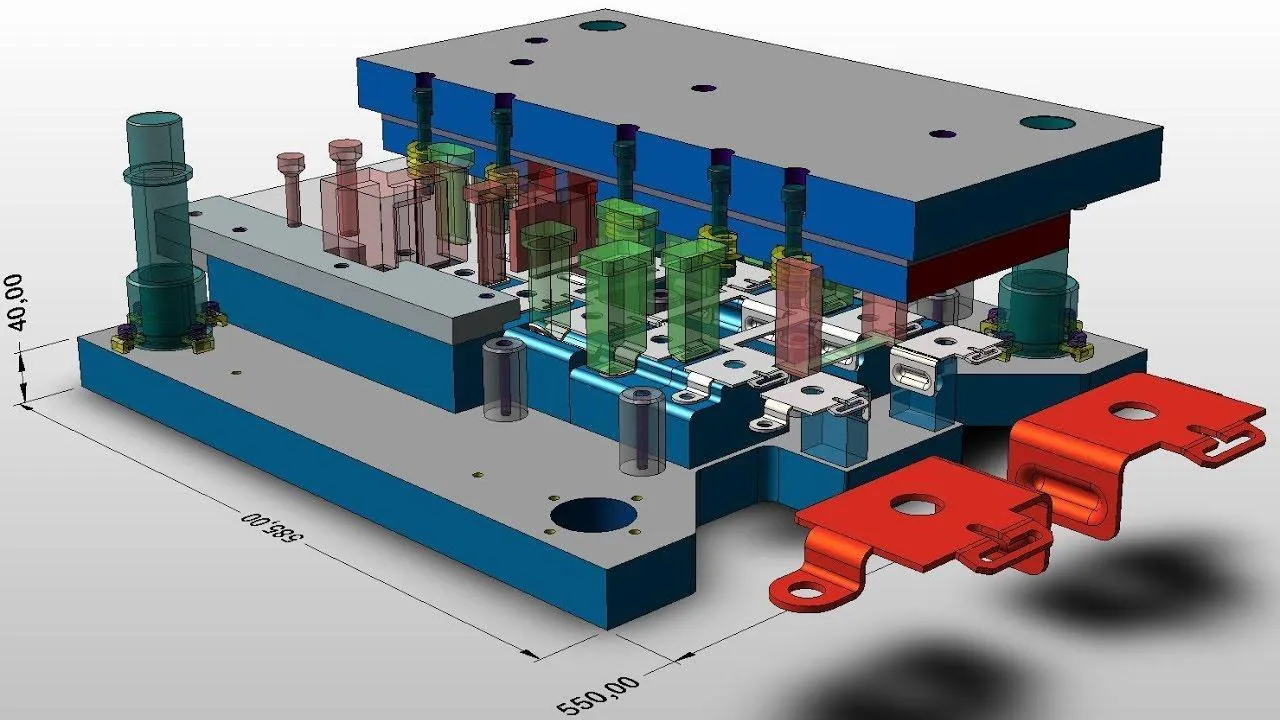
3D stamping die design stage using specialized software
4.2. Manual vs. CNC die making
-
Manual: Limited to very simple dies, low accuracy, rarely used today.
-
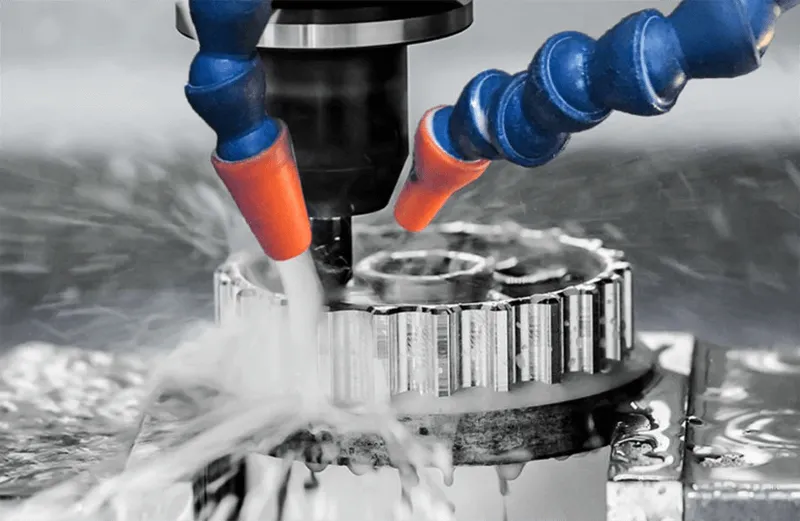
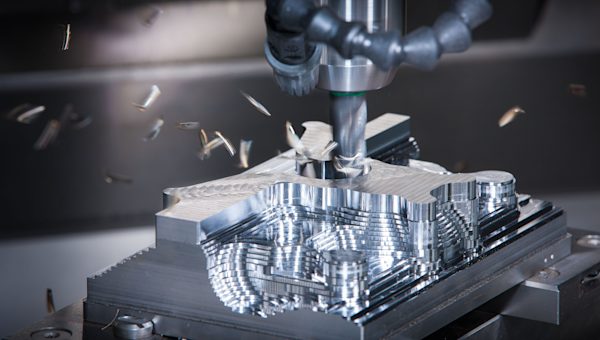
CNC machining: The standard method. CNC milling, turning, wire EDM, and EDM sinking deliver micron-level accuracy, impossible with manual methods.
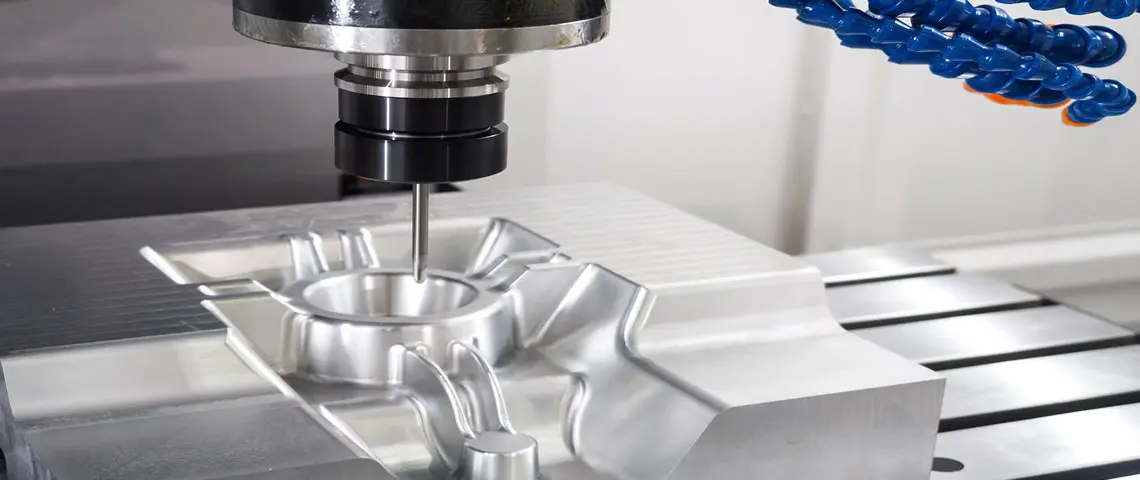
3D stamping die design with specialized software ensures high accuracy
4.3. Traditional vs. modern die manufacturing
-
Traditional: Relies heavily on experience and universal machines; accuracy depends on craftsmen.
-
Modern: Uses CAD/CAM/CNC with process simulation before production, ensuring optimized design, reduced errors, and shorter lead times.
5. Die Quality Evaluation Criteria
5.1. Durability and strength
Dies must be made from suitable tool steels (e.g., SKD11, DC11), properly heat-treated for hardness and toughness, to avoid chipping or deformation. Die life is measured in strokes.
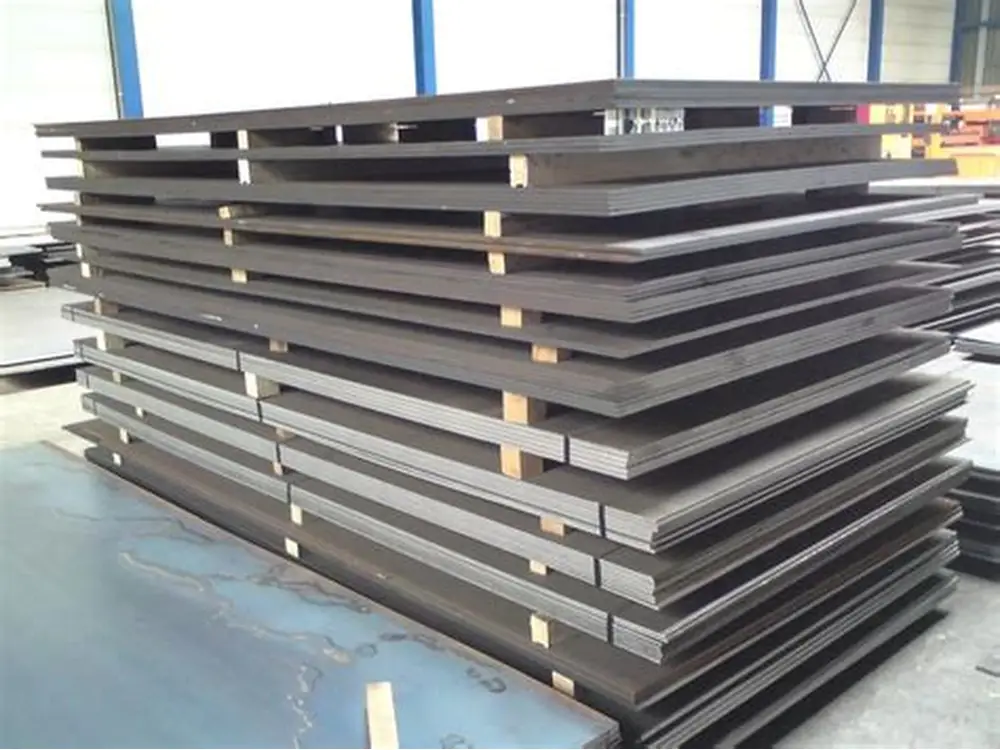
SKD11 steel is a common material for manufacturing stamping dies requiring high durability
5.2. Accuracy in operation
Stamped parts must meet design tolerances in dimensions and shape. This depends entirely on die precision in both design and manufacturing.
5.3. Productivity & efficiency
A good die should run reliably at high press speeds with minimal issues (misfeeds, punch breakage), maximizing press efficiency.
6. Cost and Pricing of Stamping Dies
6.1. Cost factors
-
Product complexity
-
Die type (progressive > compound > simple)
-
Die size
-
Tool steel material (imported specialty steels are more expensive)
-
Required accuracy and service life
6.2. Cost comparison by die type
| Criteria | Simple Die | Compound Die | Progressive Die |
|---|---|---|---|
| Initial investment | Low | Medium | High |
| Productivity | Low | Medium | Very high |
| Part complexity | Simple | Moderate | Complex |
| Unit cost (mass production) | High | Medium | Very low |
| Best suited for | Low-volume, prototyping | Flat parts with high precision | Large-scale mass production |
6.3. In-house vs. outsourcing die making
Building dies in-house requires heavy investment in machinery, technology, and skilled manpower. For most manufacturers, outsourcing to specialized die makers is the optimal choice in both cost and quality.
7. Trusted Partner for Stamping Dies – Automech
When seeking a reliable partner in precision machining and stamping die manufacturing, Automech stands out in Vietnam.
-
State-of-the-art CNC equipment: Advanced Japanese and European CNC milling, turning, wire EDM, and EDM sinking ensure maximum accuracy and compliance with strict technical requirements.
-
Experienced engineers: Skilled in CAD/CAM design, materials, and manufacturing technologies, providing optimal die solutions that extend tool life and production efficiency.
-
Professional workflow: From requirements intake, design, simulation, machining, assembly, tryout to handover – every stage follows strict quality control.
-
Comprehensive support: Warranty and periodic maintenance, with prompt technical assistance to keep your production line stable.
Choosing Automech means gaining not just a supplier, but a strategic partner capable of turning your ideas into flawless products.

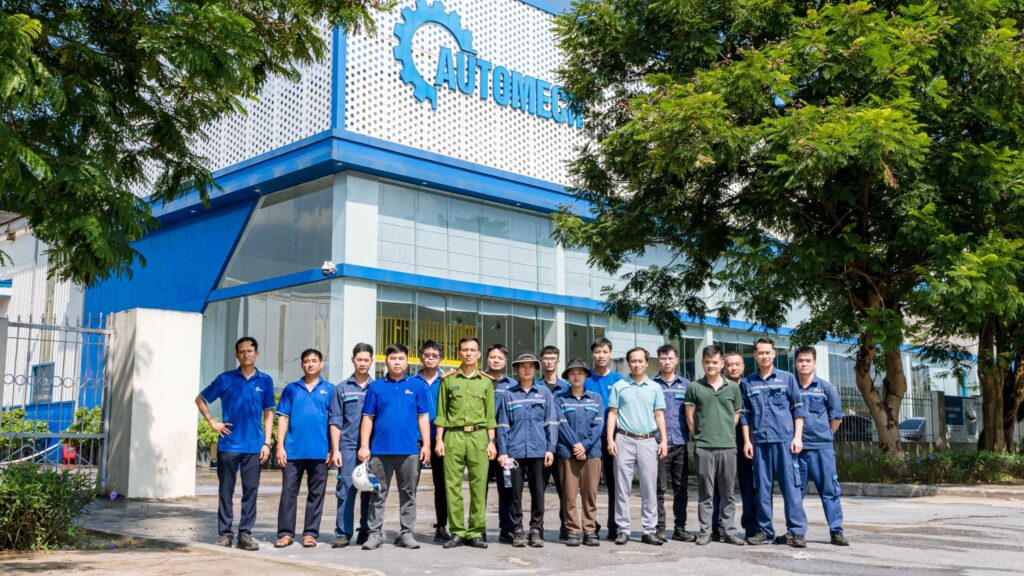
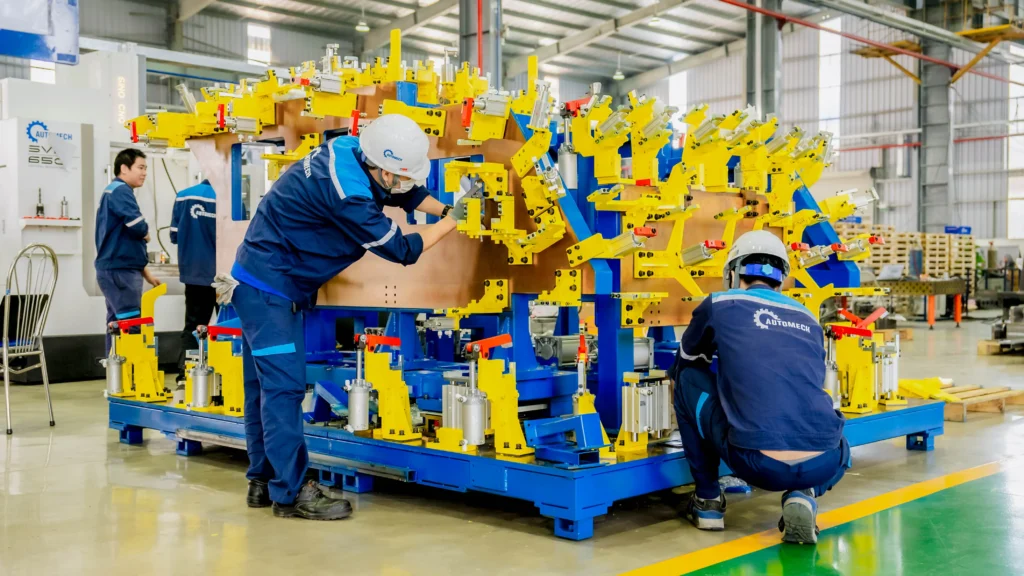
Automech factory is equipped with advanced machinery for precision die manufacturing
8. Conclusion
8.1. Role of stamping dies in modern industry
Stamping dies are not just tools – they are the foundation of mass production, enabling high-quality products at competitive prices and driving industrial growth.
8.2. Maximizing efficiency through proper die selection
Choosing the right type of die (simple, progressive, compound) and investing in quality from the start ensures long-term productivity, product quality, and economic performance.
8.3. Consultation for custom die making
If you have a product idea and need a manufacturing solution, don’t hesitate to consult industry experts for the most professional advice and support.
AUTOMECH MANUFACTURING AUTOMATION DIES AND TOOLS JSC
Address: Lot E5, Dinh Tram Industrial Zone, Nen Ward, Bac Ninh Province, Vietnam
Hotline: +84 907 89 89 62
Website: automechtool.vn
Fanpage: Automech Manufacturing Automation Dies and Tools JSC
YouTube: AutomechKhuonTools