

 Duyen Nguyen
To operate a CNC milling machine at its full capacity, the secret lies not only in the control software or sharp cutting tools but also in a central component: the milling head. A poor choice in this area can lead to skyrocketing operating costs, reduced equipment lifespan, and substandard products. So, how can you make the right investment decision? This article serves as a comprehensive guide, decoding every aspect from technical structure and common variants to smart selection and maintenance strategies, helping you optimize production efficiency and master the “heart” of the machine.

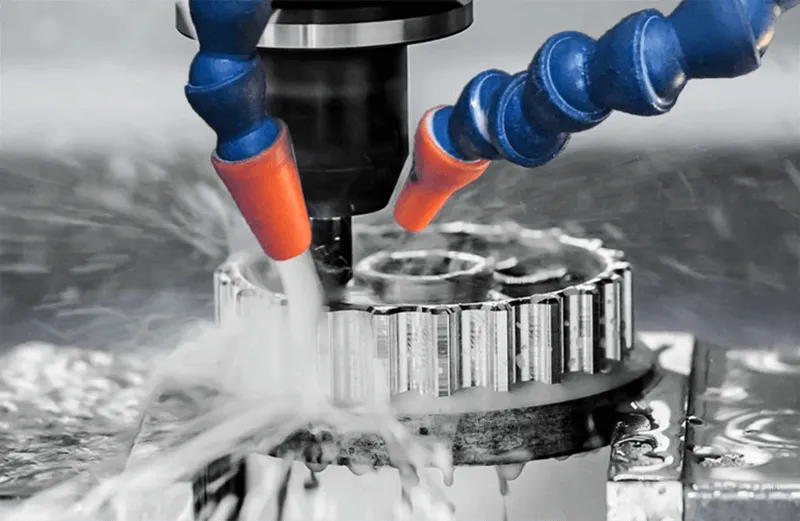
Close-up of a modern CNC milling head in operation
1. Introduction to the Milling Head
1.1 What is a Milling Head?
A milling head is a mechanical assembly located at the top of a milling machine, primarily responsible for clamping the cutting tool (milling cutter) and transmitting rotational motion from the motor to the tool to perform material removal from the workpiece. This component largely determines the technological capabilities of the entire machine.
1.2 Role of the Milling Head in Machining
The milling head plays a central role, directly influencing three core factors in the machining process:
- Technological Capability: Determines the machining methods the machine can perform (face milling, slot milling, drilling, boring, 3D machining, etc.).
- Precision: The rigidity and accuracy of the spindle dictate the tolerances and precision of the final product.
- Surface Quality: The speed, stability, and vibration of the milling head directly affect the smoothness of the machined surface.
1.3 Why Understand the Milling Head When Investing in a CNC Machine?
Investing in a CNC milling machine is a significant financial decision. Understanding the milling head helps you:
- Optimize Investment Capital: Selecting a milling head suited to actual needs avoids wasting money on unnecessary features or inefficient investments.
- Ensure Production Capability: An unsuitable milling head may limit order acceptance, hinder machining of complex parts or hard materials, and reduce competitiveness.
- Estimate Operating Costs: The milling head affects tool lifespan and maintenance costs. A correct choice minimizes long-term operating expenses.
2. Structure and Operating Principle of the Milling Head
2.1 Structure of the Milling Head
A milling head comprises multiple complex components, each serving a distinct role.

Diagram of the detailed structure of the main components of a milling head
2.1.1 Milling Head Body
Typically made from high-quality cast iron to ensure rigidity, good vibration resistance, and a robust framework for assembling other components.
2.1.2 Drive System
Includes the motor and transmission system (gearbox, belts). Its task is to generate rotational motion and transmit it to the spindle while allowing adjustment of various speed ranges.
2.1.3 Spindle Assembly
This critical component consists of:
- Spindle: Directly clamps the cutting tool and rotates at high speed. The spindle’s accuracy, concentricity, and rigidity are vital factors.
- Tool Clamping/Releasing Mechanism: Uses standard taper systems (BT, SK, HSK, etc.) to securely clamp and quickly release tools with precision.
2.1.4 Cooling and Lubrication System
- Lubrication: Automatic oil or grease pumps lubricate gears and bearings, ensuring smooth operation and reducing wear.
- Cooling: Many modern milling heads feature spindle cooling systems using oil or air to dissipate heat during high-speed operation, maintaining accuracy.
2.2 Operating Principle of the Milling Head
The operating principle is straightforward: The electric motor starts, generating rotational motion. This motion is transmitted through the gearbox or belt system to adjust speed. Finally, the motion is transferred to the spindle, rotating the clamped cutting tool to perform material removal.
3. Common Types of Milling Heads
3.1 Classification by Spindle Orientation

Comparison of three common milling head types: vertical, horizontal, and universal
3.1.1 Vertical Milling Head
Features a spindle mounted vertically, perpendicular to the machine table. This is the most common type, versatile for face milling, slot milling, drilling, and boring.
3.1.2 Horizontal Milling Head
Has a spindle mounted horizontally, parallel to the machine table. This type offers high rigidity, ideal for heavy cutting, deep slot milling, or using disc cutters.
3.1.3 Universal Milling Head
Also known as a multi-directional milling head, it allows the spindle to rotate at various angles. It combines the advantages of both vertical and horizontal types, enabling machining of inclined or complex surfaces without special fixtures.
3.2 Classification by Adjustment Mechanism
3.2.1 Fixed Milling Head
A type with a fixed spindle position and orientation during operation.
3.2.2 Adjustable Milling Head
A universal milling head that allows users to adjust the spindle’s tilt angle for complex cutting paths.

Universal milling head capable of flexible rotation for machining complex angles
3.3 Classification by Technology
3.3.1 Mechanical Milling Head
Speed and other parameters are manually adjusted using levers or handwheels.
3.3.2 CNC Milling Head
All operations, including speed, tool changes (with ATC), and cooling, are automatically controlled by a computer program (CNC).
4. Role of the Milling Head in Machining Operations
4.1 Ensuring Machining Accuracy
The spindle’s runout, concentricity, and the overall rigidity of the milling head directly affect the tolerances of machined parts. A high-quality milling head minimizes vibrations, ensuring the tool follows the programmed path accurately.
4.2 Impact on Machining Speed and Product Quality
A high-power milling head with a wide speed range enables high-performance cutting, increasing productivity. Its stability determines the surface quality, minimizing scratches or waviness.

High-speed milling head enhances productivity and ensures surface quality
4.3 Impact on Tool and Machine Lifespan
Vibrations from a low-quality or worn milling head are a leading cause of tool chipping or breakage. Over time, they also cause wear on other machine components.
4.4 Cost Savings with the Right Milling Head Choice
Choosing the right milling head reduces scrap rates, extends tool life, shortens machining time, and lowers maintenance costs, optimizing production costs per product.
5. Criteria for Selecting the Right Milling Head
5.1 Based on Material Type
Hard materials like alloy steel or stainless steel require a milling head with high torque at low speeds and high rigidity. Soft materials like aluminum need high RPM for optimal surface quality.
5.2 Based on Workpiece Size and Product Requirements
Large, heavy parts are better suited for horizontal milling heads due to their superior rigidity. Small, complex parts may require the flexibility of vertical or universal milling heads.
5.3 Based on Required Spindle Speed
Finishing operations require high spindle speeds, while roughing needs higher torque over speed.
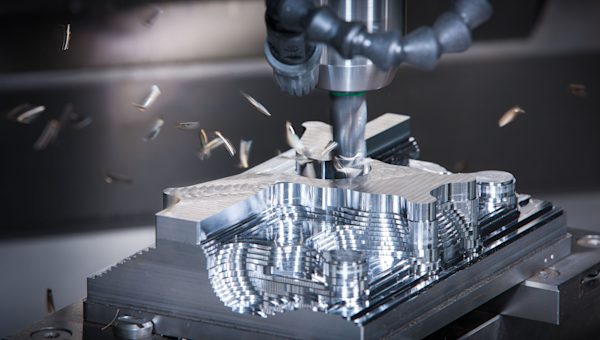
Selecting the spindle speed of the milling head is a critical factor in machining
5.4 Based on Automation and Productivity Needs
For high productivity and mass production, a CNC milling head with an automatic tool changer (ATC) is essential.
5.5 Based on Investment and Maintenance Costs
Determine the initial budget and consider long-term operating, maintenance, and replacement part costs for a sustainable investment.
6. Guide to Using and Maintaining the Milling Head
6.1 Installation and Alignment Process
For safety and performance, installation should be performed by experienced technicians. After installation, use a dial indicator to align the spindle perpendicular to the machine table, ensuring geometric accuracy.
6.2 Checking Milling Head Accuracy Before Machining
Before each shift or when machining critical parts, check the spindle’s runout using a dial indicator to ensure it is within the manufacturer’s tolerances.

Technician checking milling head accuracy with a dial indicator
6.3 Periodic Cleaning of the Milling Head
- Daily: Clean chips and coolant residue from the housing and spindle.
- Weekly: Check and replenish lubricant for the gearbox and sliding mechanisms.
- Periodically: Inspect belt tension, gear wear, and bearing condition.
6.4 Signs Indicating Maintenance or Replacement Needs
- Unusual or loud noises during operation.
- Increased vibration.
- Excessive spindle heat.
- Increased machining errors despite checking other factors.
- Lubricant leaks.
7. Common Milling Head Issues and Solutions
7.1 Vibration During Machining
- Causes: Worn or damaged spindle bearings; unbalanced tools; improper cutting parameters.
- Solutions: Replace bearings; balance tools; adjust speed and feed rates.

Poor surface quality—a consequence of milling head issues
7.2 Machining Errors
- Causes: Spindle runout or misalignment; milling head offset from the table.
- Solutions: Tighten or replace bearings; realign the milling head.
7.3 Unusual Noises from the Milling Head
- Causes: Lack of lubrication; worn gears or bearings.
- Solutions: Check and replenish lubricant; inspect and replace worn components.
7.4 Excessive Heat at High Speeds
- Causes: Faulty spindle cooling system (if equipped); insufficient lubrication; overly tight or damaged bearings.
- Solutions: Check cooling and lubrication systems; contact a technician to inspect and realign bearings.
8. Frequently Asked Questions About Milling Heads
8.1 How Does a CNC Milling Head Differ from a Mechanical One?
The main difference lies in the control mechanism. CNC milling heads are computer-controlled, enabling complex movements with high precision. Mechanical milling heads rely on manual operation, depending heavily on the operator’s skill.

Comparison of CNC milling head (left) and mechanical milling head (right)
8.2 How Often Should a Milling Head Be Maintained?
Follow the manufacturer’s recommended maintenance schedule, typically every 3 months, 6 months, and annually. However, basic cleaning and checks should be performed daily.
8.3 Can a Milling Head Be Upgraded?
Yes, but it’s complex and costly. Upgrades may involve replacing the spindle with a higher-speed model or adding a cooling system, requiring compatibility with the machine’s structure.
8.4 Are Milling Heads Interchangeable Across Different Machine Models?
No. Each milling head is designed for specific machine models based on mounting structure, electrical system, and drive mechanism.
9. Where to Buy Quality, Reputable Milling Heads
9.1 Criteria for Choosing a Reputable Supplier
- Authorized distributor or long-standing market reputation.
- Knowledgeable technical team for in-depth consultation.
- Availability of spare parts and transparent pricing policies.
9.2 Warranty and Technical Support Commitments
A reputable supplier offers clear warranty policies and 24/7 technical support to address issues during operation or installation.
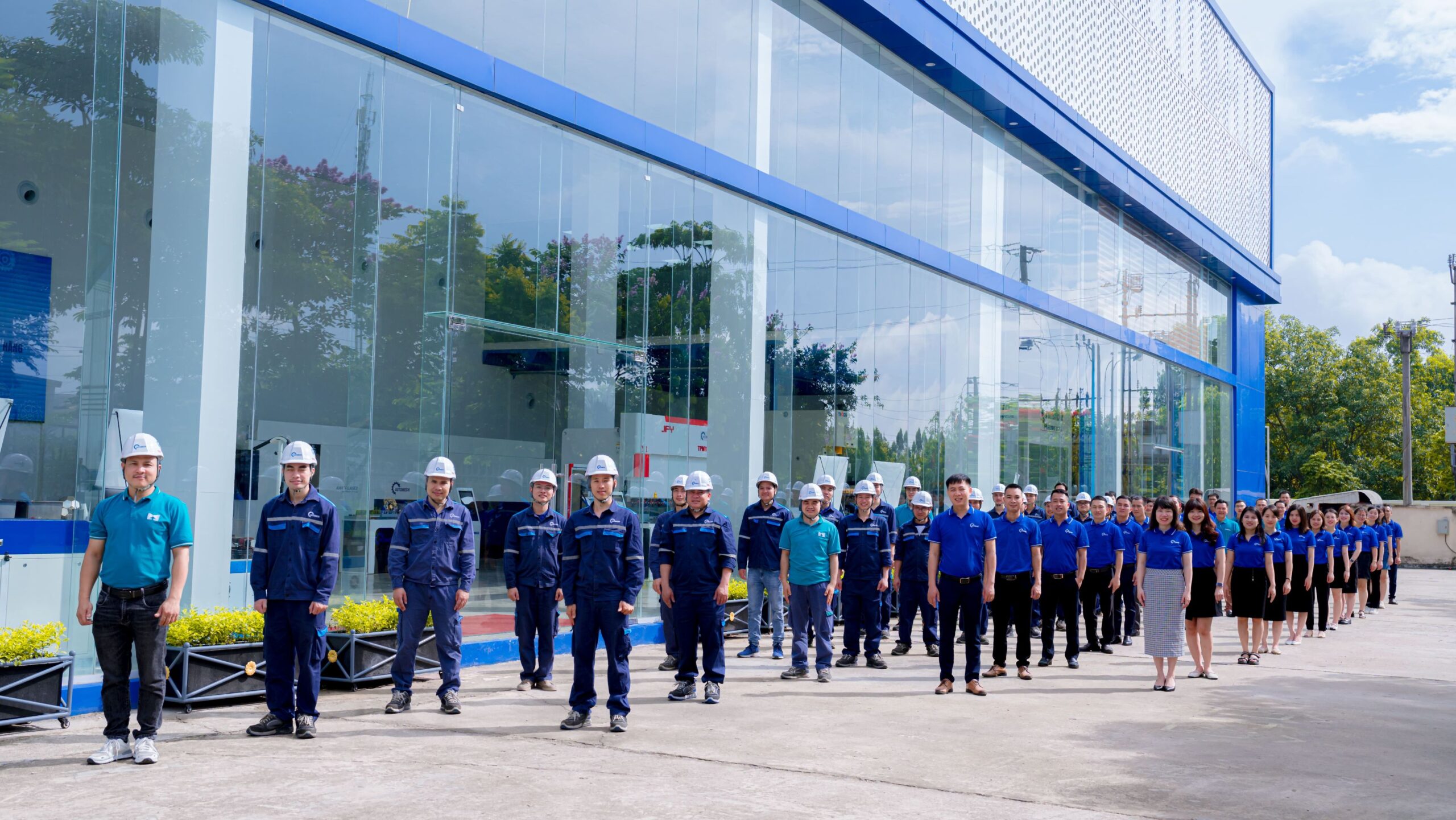
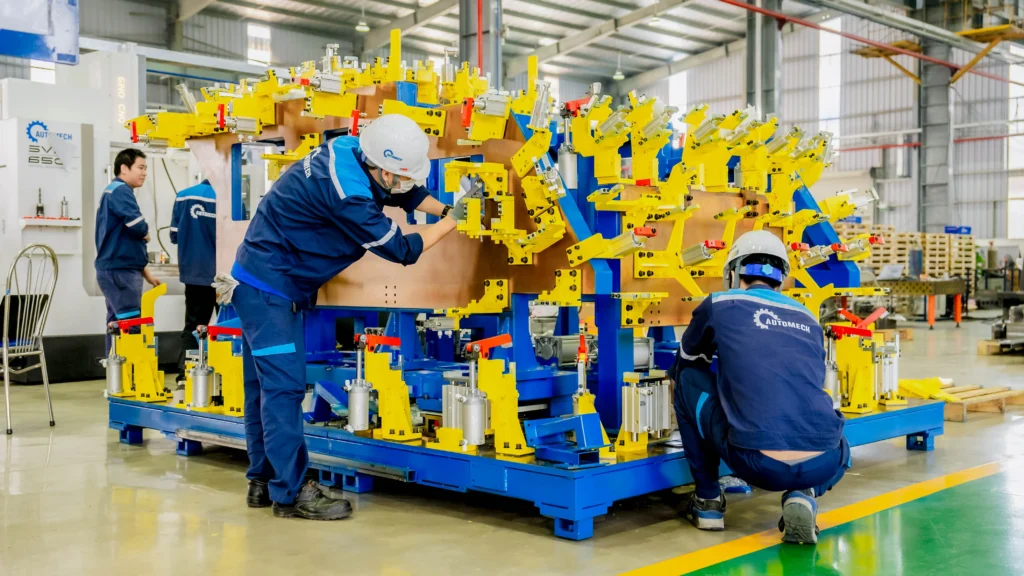
Professional technical team supporting milling head installation and maintenance
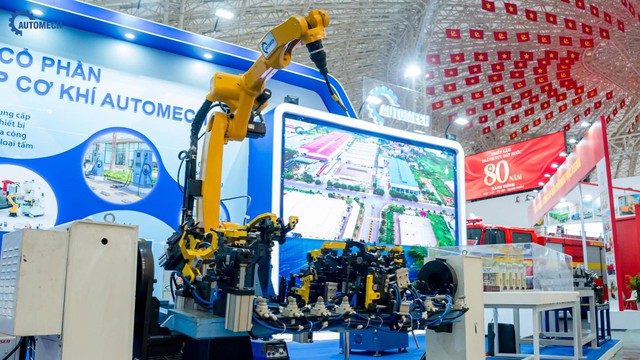
9.3 Benefits of Purchasing Milling Heads from Automech
Partnering with a comprehensive, high-capacity local manufacturer like Automech delivers exceptional value:
- In-Depth Consultation and Customized Solutions: Work directly with a team of over 40 leading engineers in mechanical and automation fields to analyze production challenges and develop tailored solutions.
- Access to Modern Manufacturing Capabilities: Benefit from a 10,000+ m² mold, fixture, and automation machine factory in Bac Giang, equipped with advanced machinery from brands like AWEA, YADON, HWACHEON, and Han’s Laser.
- Assured Quality and Origin: Products and solutions meet international ISO 9001:2015 standards with guaranteed clear origins.
- Proven Expertise: Trust in capabilities validated through large-scale projects with leading partners in automotive (VinFast), aerospace, and electronics industries.
- Comprehensive After-Sales Service: Receive prompt technical support, transparent warranty policies, and professional maintenance services from a robust team, ensuring stable and efficient production.
AUTOMECH MANUFACTURING AUTOMATION DIES AND TOOLS JSC
Address: Lot E5, Dinh Tram Industrial Park, Nenh Ward, Bac Ninh Province, Vietnam
Hotline: 0907 89 89 62
Website: automechtool.vn
Fanpage: Automech Manufacturing Automation Dies and Tools JSC
YouTube: https://www.youtube.com/@AutomechKhuonTools